
In the design and implementation of sanitation systems, adherence to standards for effective wastewater disposal is essential. For toilets, this involves a deep understanding of the technical requirements that ensure not only the proper functioning of the installation but also the protection of public health and the environment. Current regulations address aspects such as the diameter of pipes, the appropriate slope for optimal drainage, and the correct installation of ventilation devices to avoid issues related to unpleasant odors and noise. A poorly designed or improperly installed system can lead to recurring and costly problems.
Essential standards for compliant toilet drainage
Rigorous standards are crucial when it comes to sanitary installation and, in particular, wastewater disposal. The DTU 60.1 and DTU 60.11 standards play a central role, as they define the precise rules for the installation of pipes and the drainage of rainwater. These standards govern the acceptable dimensions for plumbing connections, specifying in particular the nominal diameter (DN) that must be adhered to in order to ensure effective and unobstructed drainage of wastewater, including household water, sewage, and rainwater.
Pipes are the backbone of any drainage system, so their design must allow for optimal drainage. To achieve this, the choice of pipe diameter is determined by the DN, which takes into account the nature and volume of the effluents to be treated. The height for horizontal toilet outlet must also meet specific criteria to ensure smooth flow and avoid the risks of backflow or blockage of the conduits.
Drainage networks, whether unitary, separate, or individual, must be designed to transport wastewater to the municipal water collector without compromising the system’s performance. The establishment of adequate ventilation systems is also fundamental to prevent the creation of vacuum that could disrupt the flow of water and release undesirable odors into the home. Keep these guidelines in mind for an installation that complies with current requirements and to prevent future issues.
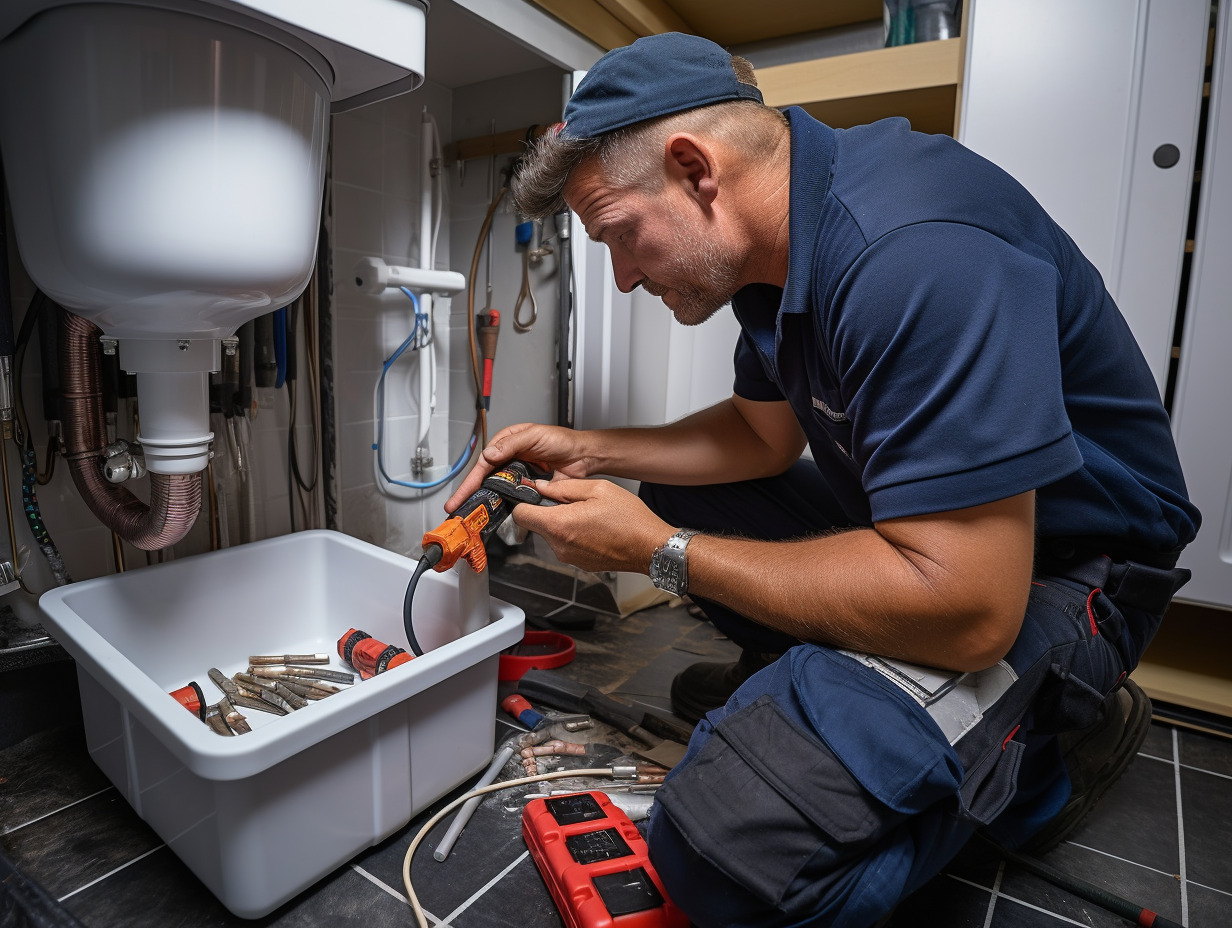
Practical tips for optimal toilet drainage installation and maintenance
Adhering to the drainage slope is crucial in the installation process. Ensure that it is sufficient to allow for the natural flow of wastewater, but not too steep, as this could cause the separation of liquids from solids, thereby harming the system’s efficiency. An angle between 2% and 3% is generally recommended for drainage pipes.
Drainage pipes require special attention during installation. Opt for materials resistant to corrosion and waste accumulation, while ensuring a good seal on the joints. The quality of these components is a safeguard against leaks and blockages, which are notorious enemies of any sanitary infrastructure.
For sanitary fixtures such as sinks, basins, and toilets, the nominal diameter of the pipes must be chosen based on the fixture being served, in accordance with the DN specifications. This ensures smooth drainage and prevents the risk of clogging. Using parts and sanitary accessories that comply with current standards is a guarantee of longevity for your installation.
Regarding the maintenance of toilet drainage, regular inspection of ventilation systems and main collectors prevents inconveniences. Integrate a routine check to quickly detect and repair any anomalies, such as cracks or partial blockages. These proactive maintenance practices are the foundation of a reliable and durable sanitary installation.