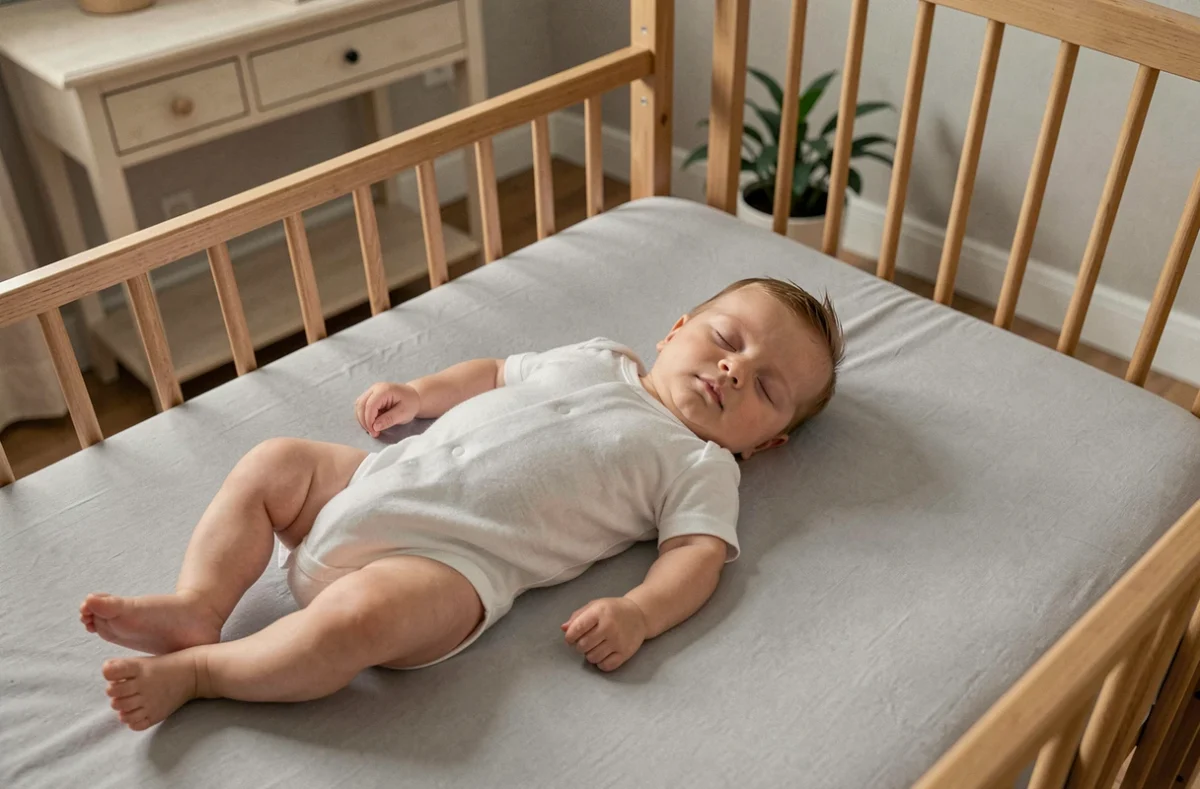
The question of when to move a baby into their own room comes up in the first few weeks after birth. Current medical recommendations advise that infants sleep in a separate bed but in the same room as their parents for at least the first six months. This six-month mark is a minimum safety guideline, not a deadline by which families must change their arrangements.
Parents’ room or baby’s room: what does “sleeping alone” mean?
A common misunderstanding can make it harder for parents to decide. “Sleeping alone” can mean two very different things: sleeping in their own bed (rather than sharing their parents’ bed) or sleeping in a separate room. Safe sleep recommendations primarily address the first point. Babies should sleep in their own bed from birth, on a firm, flat mattress, without a pillow or thick blanket.
Parents wondering at what age to move their baby into their own room are actually referring to the second meaning: moving to a separate room. This distinction matters because room-sharing recommendations (not bed-sharing) apply both at night and during daytime naps.
Room-sharing without bed-sharing reduces sleep-related risks for infants. Being able to hear an adult breathing and intervene quickly if needed helps explain this recommendation. Bed-sharing, meaning sharing the parents’ mattress, is discouraged by most health authorities because of the risks of suffocation and overheating.
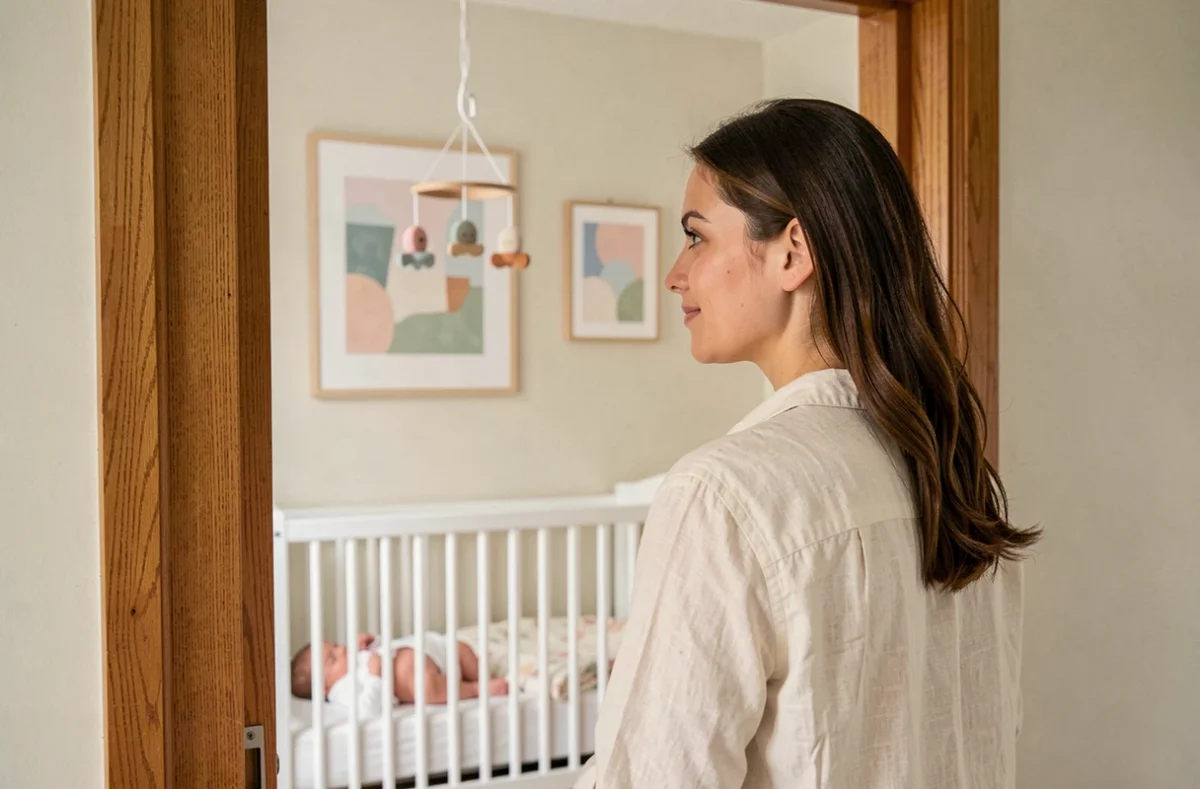
Six months: a safety guideline for moving to the baby’s room
Six months is the age most often cited in recommendations as the point at which parents can consider moving their baby into a separate room. This guideline is based on the infant’s physiological development: after six months, rolling reflexes, temperature regulation and sleep cycles become more stable.
However, six months is not a mandatory moving date. Parents are not required to change their arrangements at that exact point. Some families continue sharing a room well beyond then, for practical reasons (limited space, extended breastfeeding) or simply because the setup works for everyone.
Signs of readiness to look for in your child
Rather than following a rigid timeline, several practical signs can help you assess whether your child is ready for the transition:
- They sleep for several hours at a time without needing parental intervention, which may indicate an emerging ability to settle back to sleep on their own.
- They no longer startle every time they hear everyday sounds in the parents’ room (movement, waking up, quiet conversation).
- They seem comfortable in their bed, rolling over and finding a comfortable position without help.
Conversely, a baby who wakes frequently because of their parents’ noises (as several families have reported after trying the transition at four or five months) may actually sleep better in a quiet space. Sleep disturbances affecting one another are a sign to take seriously, even before the six-month mark.
Safe sleep in a separate room: the non-negotiables
Moving to another room does not mean compromising on a safe sleep environment. The same safe sleep rules apply wherever your child sleeps.
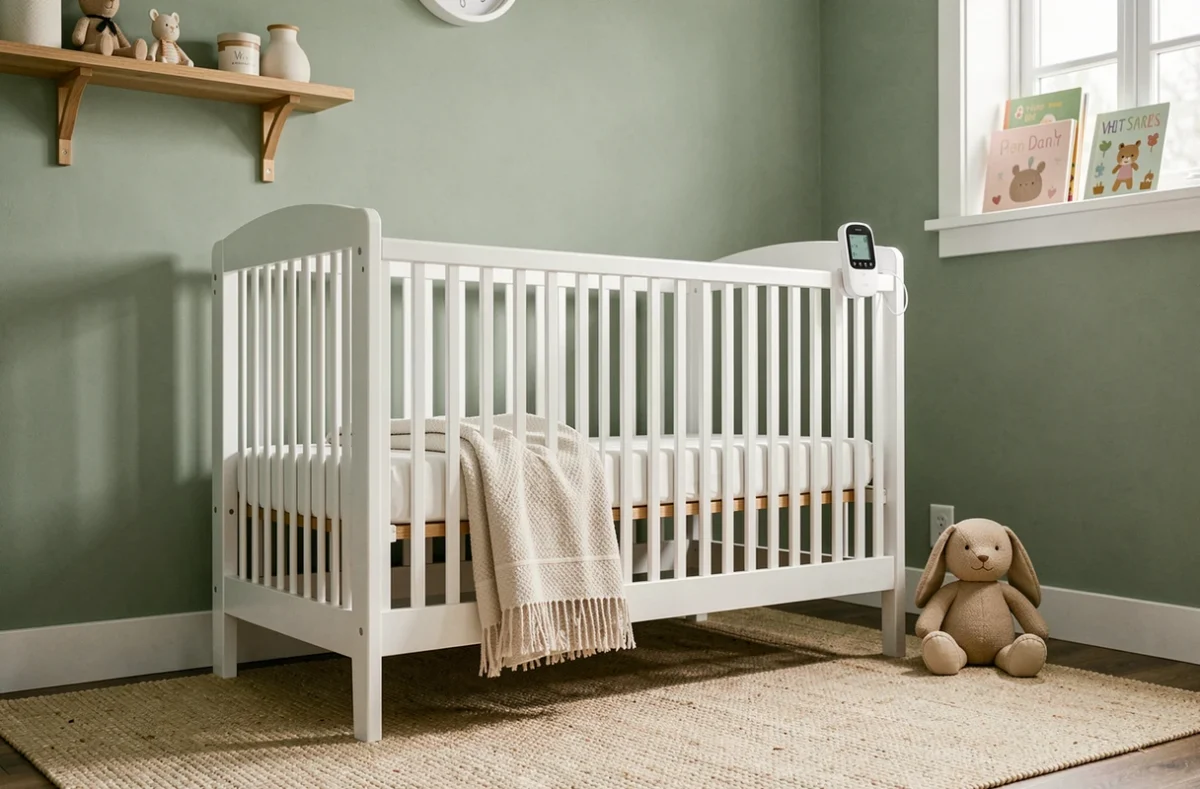
- A crib with a mattress that fits the base exactly, leaving no gaps, remains the standard option until the child regularly tries to climb over the rails.
- The room should ideally be kept at a comfortable temperature—not too hot or too cold—with a season-appropriate sleep sack instead of a blanket.
- There should be no soft objects in the crib (large stuffed toys, cushions, padded crib bumpers), even after the child is six months old.
- A video or audio baby monitor lets you keep an eye on your child from a distance, but it is no substitute for a properly set-up sleep environment.
One often-overlooked point: the recommendation that babies sleep in the same room as their parents also applies to naps. Families who put their baby in their own room only during the day, assuming the risk is lower then, are missing this recommendation.
Managing parental anxiety during the move to a separate room
Several parents describe the same pattern: they decide to move their child for practical reasons (lack of sleep, returning to work), but the anxiety after the first night can be harder to manage than the night wakings themselves. Compulsively checking the baby monitor and getting up several times a night to watch the baby breathe are common reactions.
This anxiety is not a sign of weakness but a normal parental response. It tends to ease after a few days, once parents see that their child sleeps just as well, or even better, in a separate space. One parent who described this phase later noted that untreated postpartum anxiety had intensified their worries.
Gradual transition or one-step change
There are two approaches, and no strong evidence to support one over the other. Some families make the change gradually: naps in the child’s room first, then the start of the night, followed by the whole night. Others make the change in one step, moving the crib into the new room on a weekend so they can manage any adjustments without the pressure of getting up for work.
The deciding factor is the quality of sleep for the whole family, not following a single prescribed routine. A child who sleeps better after a direct move does not need an artificial transition period.
The six-month mark remains a useful guideline, but every family has to work around its space constraints, feeding arrangements and child’s temperament. The one constant: a safe bed, a suitable environment and parents who are rested enough to stay alert during the day.