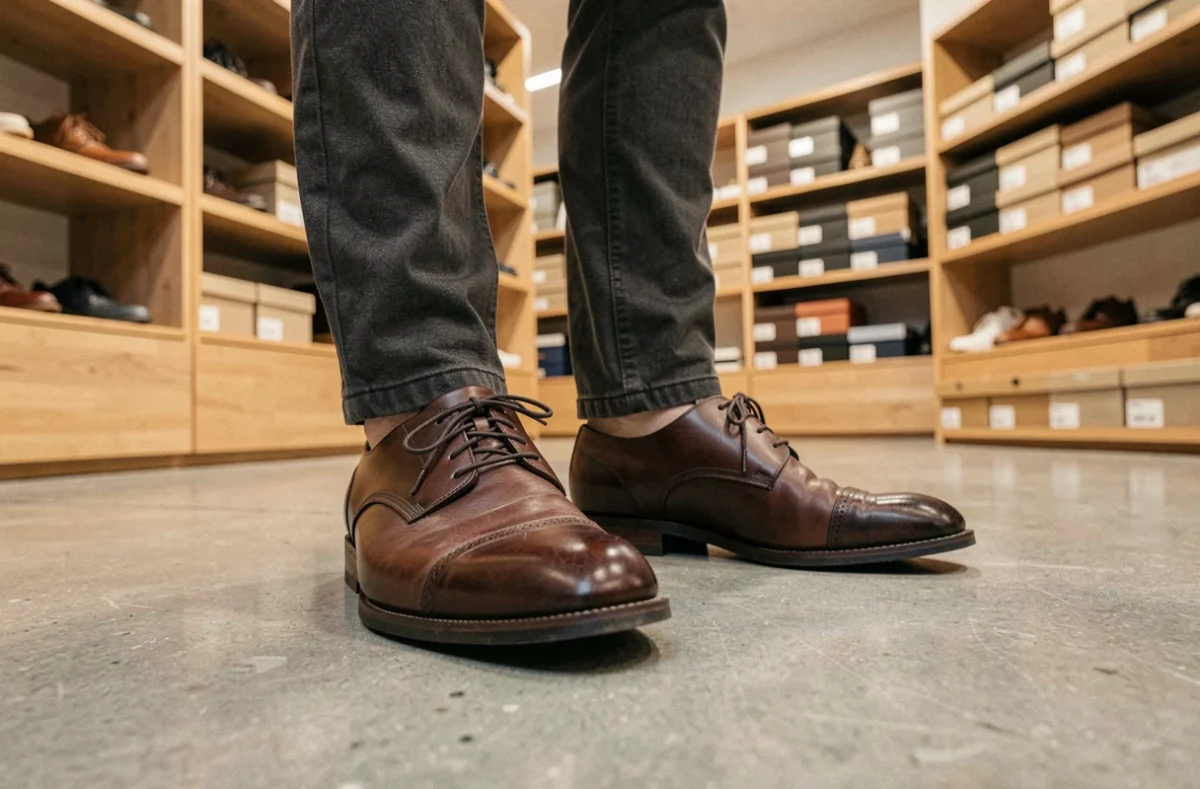
In France, the most common shoe size among adult men is around 42. This figure, often presented as an “average,” is based more on frequency data than on a precise statistical calculation. Understanding what it represents—and, above all, what it does not—helps put sizing, comfort and manufacturing in the footwear industry into perspective.
Foot length and shoe size: two measurements not to be confused
European shoe sizing (the so-called “Paris point” system) does not correspond directly to foot length in centimetres. The allowance added by each manufacturer can make the actual fit vary by half a size or even a full size.
A 2019 study published in Scientific Reports, based on more than one million foot scans collected in European stores, identified 270 mm as the most common foot length among men. This figure is not a representative average for the French population, since the sample covers several countries and is limited to customers at stores equipped with scanners.
In other words, when discussing the average shoe size for men, it is important to distinguish between the best-selling size (the statistical mode) and average foot length (the arithmetic mean). These two figures do not tell the same story.

Size 42 in France: a common reference point, not a calculated average
The national sizing survey conducted by IFTH between 2003 and 2005 remains the most frequently cited reference. Its findings indicate that the most common sizes among adult men are 41 and 42. Publicly available data from this survey do not make it possible to establish an average men’s shoe size to the nearest tenth.
No national survey of comparable scope has been published in France since then. Figures in circulation, often rounded up to 43, come from commercial sources or extrapolations. They sometimes reflect changes in sales rather than rigorous anthropometric measurements.
This distinction matters. A retailer claiming that “the average shoe size has gone from 41 to 43 in twenty years” is probably referring to a shift in the most frequently ordered size in its catalogue, not to a controlled population study.
Factors that influence men’s foot size
Several variables explain the range of shoe sizes within the male population and the changes observed from one generation to the next.
- Body height and diet: the average height of people in France has increased over the decades. Feet have grown along with overall body growth, since foot length is correlated with height.
- Genetics and ethnic background: foot shape, width and arch vary between populations. The same shoe size can fit very different foot shapes.
- Age and weight: feet widen and may lengthen slightly with age as ligaments loosen and weight increases. A 55-year-old man may not wear the same size he did at 25.
- Health conditions: certain conditions (diabetes, arthritis, chronic oedema) alter foot volume and call for shoes with the right width as well as length.
These factors show that shoe size alone does not describe a foot. Two men who wear size 42 can have radically different foot shapes.
Foot width: the factor missing from shoe labels
The analysis of scans published in 2019 highlights a frequently overlooked finding: the range of foot widths calls for several width options for each length. Most European manufacturers offer just one standard width per size, even though actual variation is considerable.
In practice, a man whose foot is 270 mm long but has a wide forefoot will find a standard size 42 uncomfortable. He may choose a 43 instead, which skews both sales statistics and perceptions of the “right size.”
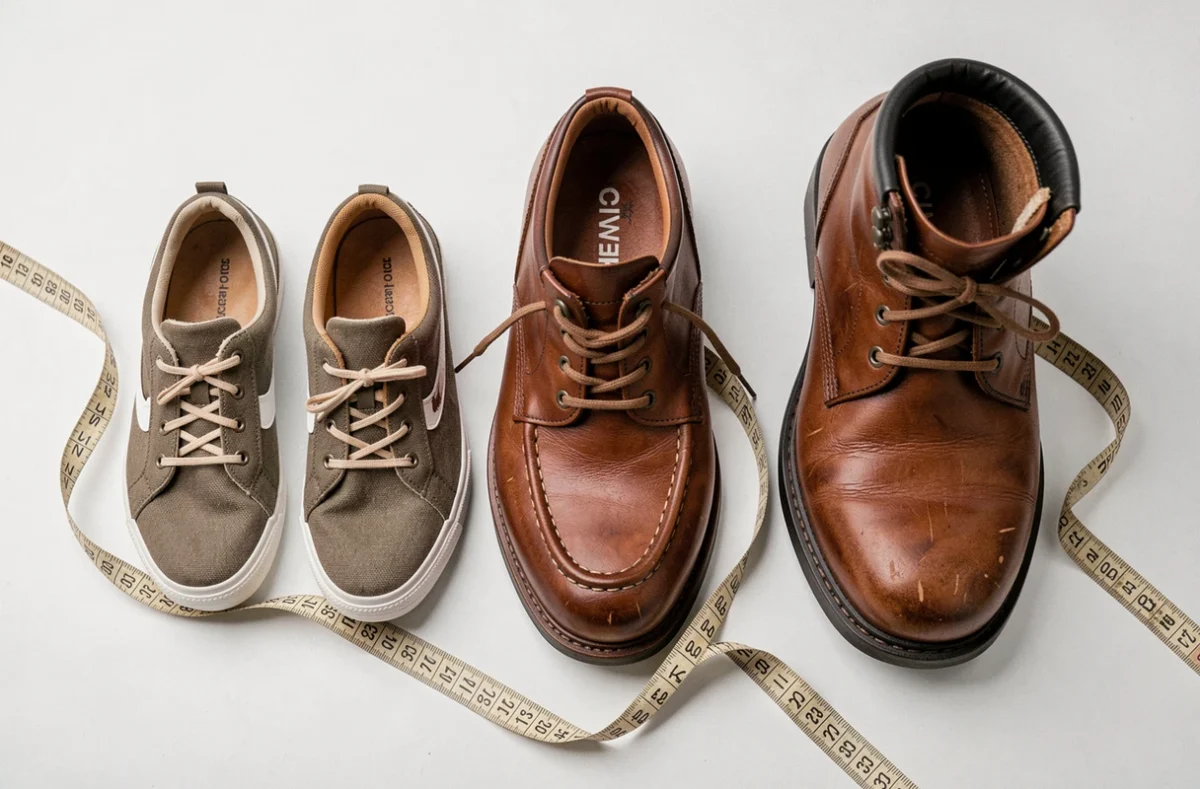
A few specialist brands, mainly from the UK and the US, offer width systems (D, E, EE or even 6E). This approach remains uncommon in France, where consumers generally choose between a size and the next half-size, with no width options.
Why width affects the statistics
When surveys measure only foot length to determine shoe size, they overlook this adjustment. The gap between the theoretical size (based on length) and the size purchased (influenced by width) can be as much as a full size. The average size purchased is therefore consistently larger than the size corresponding to average foot length.
Sizing systems and conversions between countries
International shoe-size comparisons can be misleading. European sizing (the Paris point system), UK sizing and US sizing use different scales based on different measurement starting points.
Conversions vary between charts, and each brand applies its own tolerances. A size 42 from an Italian manufacturer does not have exactly the same internal dimensions as a size 42 from a German manufacturer.
This lack of standardisation makes comparisons between countries unreliable. Saying that “Americans wear an average size 10” and “French people wear a 42” does not mean their feet are different sizes. The scales simply cannot be directly compared without a rigorous conversion.
What shoe-size statistics do not measure
Average shoe-size figures, whether they come from sizing surveys or commercial data, overlook several realities. Foot shape (Egyptian, Greek or Roman), instep height and arch flexibility: none of these factors is reflected in a shoe size.
For the industry, this oversimplification comes at a cost. Returns of shoes bought online account for a significant share of sales and are often due to fit issues rather than shoe size. 3D foot scanning, still uncommon among French retailers, could eventually provide more comprehensive data than length alone.
Size 42 remains a useful reference point for understanding where most French men fall. But reducing the foot to a single number ignores the fact that comfort depends on at least three dimensions: length, width and volume. Any future sizing surveys will need to include these factors to produce statistics that are genuinely useful.