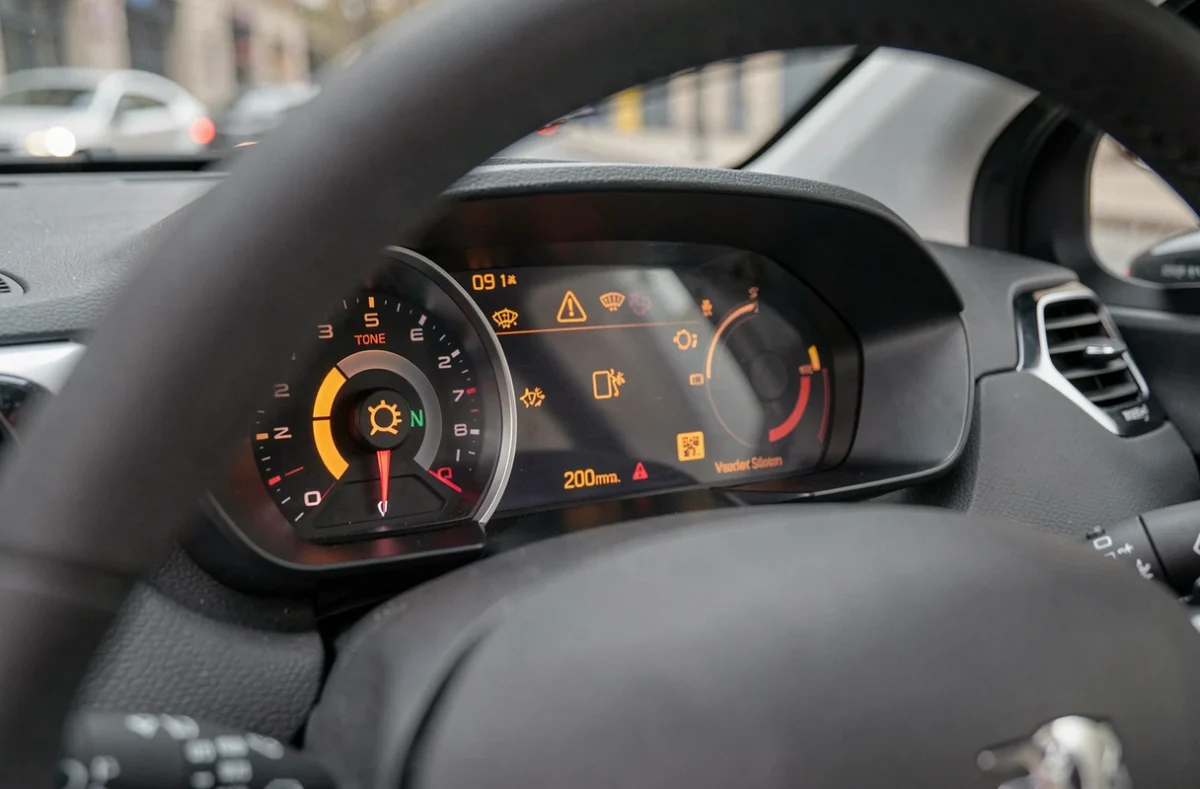
The Peugeot 208 dashboard displays dozens of warning lights, which vary depending on the vehicle generation, year of registration and powertrain. A warning light found on an electric 208 II may not exist on a petrol 208 I, and vice versa. Before looking up the meaning of a symbol, the first step is to identify the owner’s manual that matches the vehicle.
Finding the right owner’s manual for your Peugeot 208
The available warning lights depend on the version, generation and equipment of each 208. A warning light related to the traction battery appears only on the e-208, while some combustion-engine warning lights are absent from electric versions.
The official Peugeot manual, available through the ServiceBox portal, asks you to select the vehicle, its body style and the publication period corresponding to its date of first registration. This publication period is key: two 208 II models built a year apart may have different manuals if a software update changed the instrument cluster display.
To find the meaning of Peugeot 208 warning lights for your model, you only need three details: the generation (208 I or 208 II), the powertrain (PureTech petrol, BlueHDi diesel or electric e-208) and the exact date of first registration shown on the vehicle registration document.
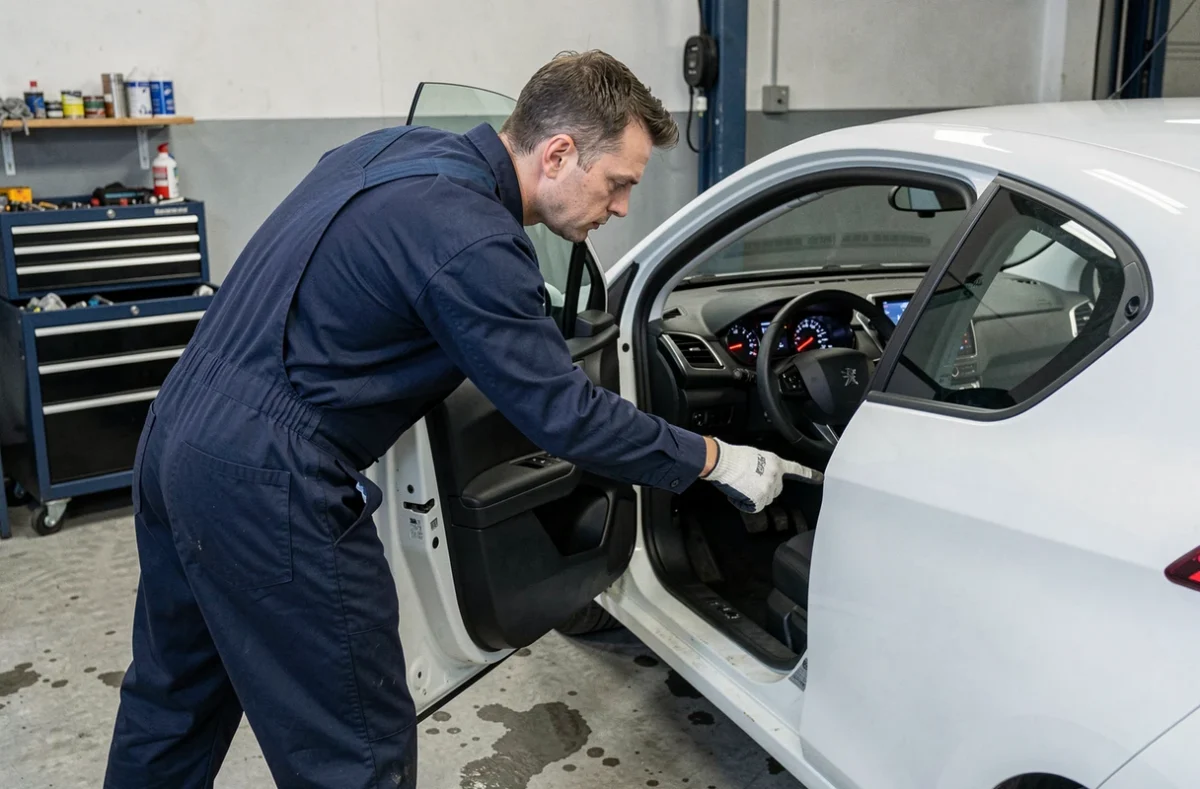
Warning light colour codes: red, orange, green and blue on the 208
Every dashboard warning light follows a standardised colour code. This provides an initial indication of urgency, but colour alone is not enough to determine what action to take.
Red: stop the vehicle
A red warning light signals an immediate risk to safety or the vehicle’s mechanical components. The most common ones on the 208 relate to engine oil pressure, coolant temperature, the braking system and the STOP warning light. If a red warning light comes on while driving, the manufacturer’s instruction is to stop the vehicle as soon as traffic conditions allow.
Orange: address the issue promptly
An orange warning light indicates a fault that does not require an immediate stop but needs attention soon. The engine warning light (check engine), tyre pressure warning and emissions control system warning fall into this category. Driving for weeks with an orange warning light on can turn a minor fault into an expensive repair.
Green and blue: operating indicators
Green and blue warning lights do not indicate a fault. They confirm that a function is active, such as dipped headlights, cruise control or ECO mode. The blue high-beam indicator simply reminds you to switch back to dipped headlights when approaching another road user.
What to note when a warning light comes on in the 208
A warning light deserves more than a quick glance. Recording four details can make a real difference to the quality of the diagnosis carried out by a professional or by you.
- The exact symbol: its shape (thermometer, engine, battery, exclamation mark) identifies the system concerned. Taking a photo of the dashboard avoids vague descriptions at the garage.
- The colour and behaviour of the warning light: a steady light and a flashing light do not indicate the same level of severity. On the 208, a flashing engine warning light generally signals a more serious fault than a steady one.
- Any message shown on the instrument cluster screen: on versions equipped with the i-Cockpit, a text message may accompany the warning light and specify the nature of the problem.
- How the vehicle behaves when the warning appears: loss of power, unusual noise, vibration or difficulty steering. Loss of power alongside a warning changes how serious the situation is and may require you to stop, even if the warning light is orange.
Noting down or photographing these four details helps the mechanic save time and avoid trial-and-error diagnosis.
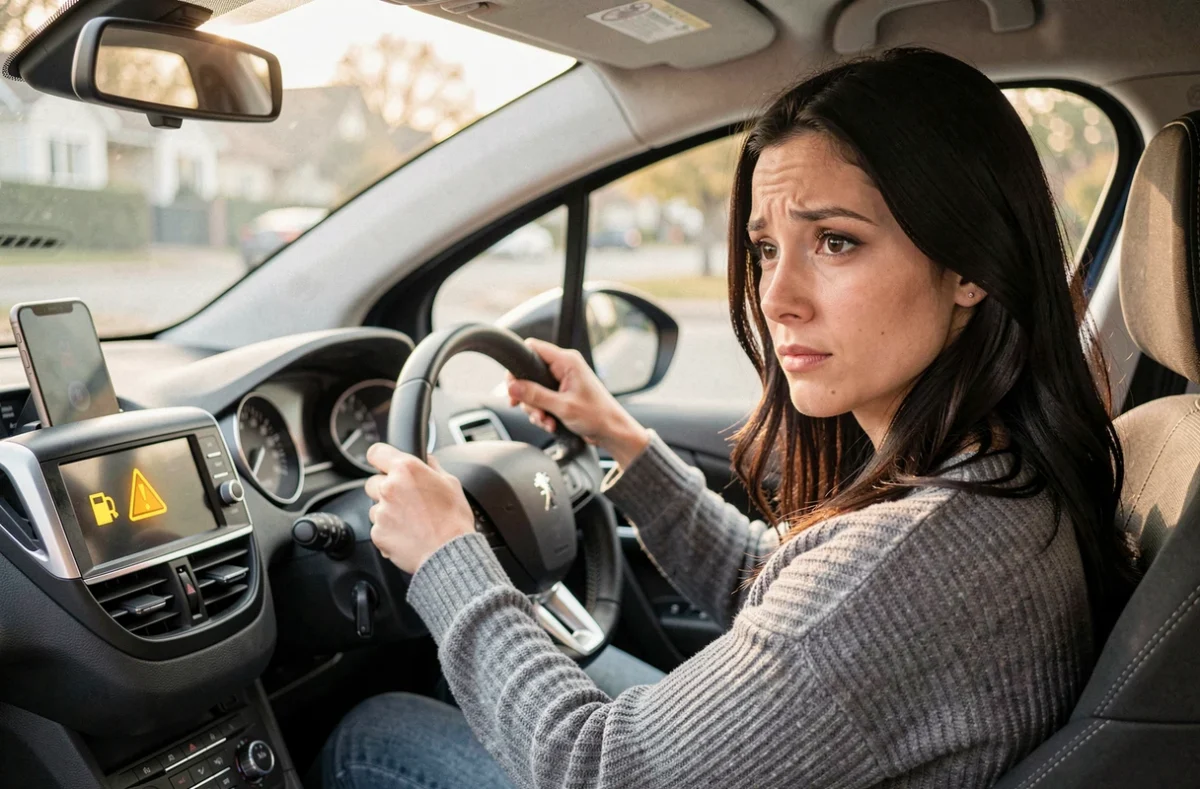
Warning lights specific to the electric e-208
The electric version of the 208 adds warning lights specific to its high-voltage powertrain. The most common relates to the traction battery charge level, which is separate from the 12 V battery warning light that relates to the battery powering standard accessories (lighting, radio and onboard computer).
Confusing the two is a common mistake. The 12 V battery warning light (a standard battery symbol, often red) indicates a fault in the auxiliary charging circuit. Traction battery alerts use different symbols and may be accompanied by a message showing the remaining range or indicating a fault in the electrical system.
On the e-208, an orange warning light related to the energy recovery system during braking may also appear. It does not affect mechanical braking, but it reduces regenerative braking efficiency and therefore the vehicle’s range.
A warning light being off does not mean there is no fault
The vehicle’s control unit can store a past fault as an OBD-II fault code, then switch off the warning light if the problem does not recur immediately.
This has a direct bearing when buying a used 208. A dashboard with no warning lights does not guarantee that no faults have been recorded. Only a diagnostic scan with an OBD tool can check the alert history. Requesting a scan before signing the paperwork helps avoid unpleasant surprises involving components such as the turbocharger, emissions control system or traction battery on electric models.
The most reliable approach when a warning light appears on the 208 is to consider three things together: its colour, its symbol and how the vehicle is behaving, then consult the manual for the exact model.