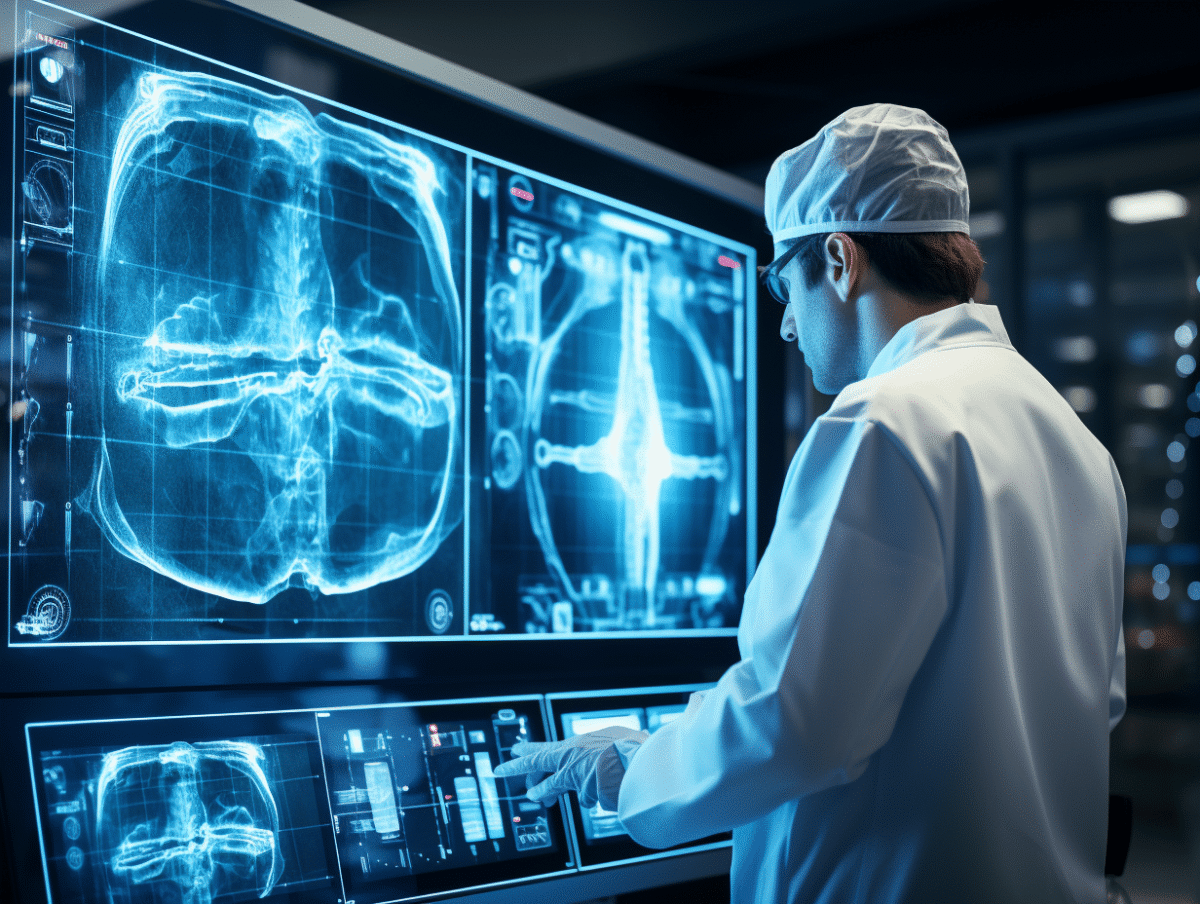
The intersection of high technology and health has initiated a true revolution in medical care. From wearable devices that monitor vital signs in real-time to artificial intelligence software that helps diagnose diseases with unprecedented accuracy, technology is redefining the boundaries of what is possible in the medical field. Technological innovations not only allow for better prevention through the collection of personalized health data but also facilitate less invasive surgical interventions with the assistance of increasingly precise robots. This digital transformation paves the way for an era where patient care is more efficient, safer, and potentially more accessible to a wider population.
Advancements in Digital Technology for Disease Monitoring and Prevention
Digital health and telemedicine are emerging as essential vectors of transformation in the medical universe. By making health services accessible, even remotely, telemedicine has opened up previously unimaginable horizons, offering virtual consultations and follow-ups to patients who are geographically distant or have reduced mobility. Health systems are integrating these innovative techniques to improve care accessibility and promote continuous monitoring, a key element of effective prevention.
Mobile applications and virtual reality (VR) as well as augmented reality (AR) are playing an increasingly prominent role in monitoring individuals’ health. With programs like ‘X-Script’, users can monitor their health indicators in real-time, benefiting from early alerts in case of anomalies. VR and AR, for their part, allow professionals to visualize and interact with medical content in an immersive way, enhancing understanding of pathologies and treatments.
Artificial intelligence (AI) contributes to a qualitative leap in medical care by analyzing massive volumes of data to facilitate diagnosis and refine treatments. Digital technologies, by making diagnosis faster and more accurate, pave the way for personalized and predictive medicine, where each patient receives attention tailored to their biological and medical profile. Patients and healthcare professionals use these tools to establish sharp therapeutic strategies, promising a future where health is intertwined with precision and innovation.

The Impact of Technological Innovations on the Efficiency and Personalization of Medical Treatments
Artificial intelligence (AI), a key player in the medical field, is disrupting the way care is delivered. By tackling the complexity of medical data, AI offers unprecedented perspectives for finer diagnostics and truly tailored treatments. Patients and healthcare professionals benefit from this valuable assistance, which allows for an unprecedented accuracy in identifying the specific needs of each individual, paving the way for personalized health.
Robotics, with its application in surgical procedures, drastically reduces the risks of human error. Surgical robots, guided by expert hands, execute movements with unparalleled precision, allowing for less invasive interventions and shorter recovery times. This human-machine synergy in operating rooms enhances care quality and optimizes outcomes for patients.
Biotechnologies are helping to shape a new medical future with the development of specific treatments such as vaccines tailored to patients’ genetic profiles. This major advancement reflects the potential of new technologies to introduce an unprecedented dimension of personalization in the fight against diseases. Care thus becomes more targeted, more effective, and potentially more tolerable for patients.
Digital health, through its innovations, redefines the relationship to care. AI, robotics, and biotechnologies are now pillars of contemporary medicine, carrying a promise of personalized, adaptive, and evolving care. These technologies, far from being mere gadgets, stand as fundamental instruments for a holistic and optimized approach to health.