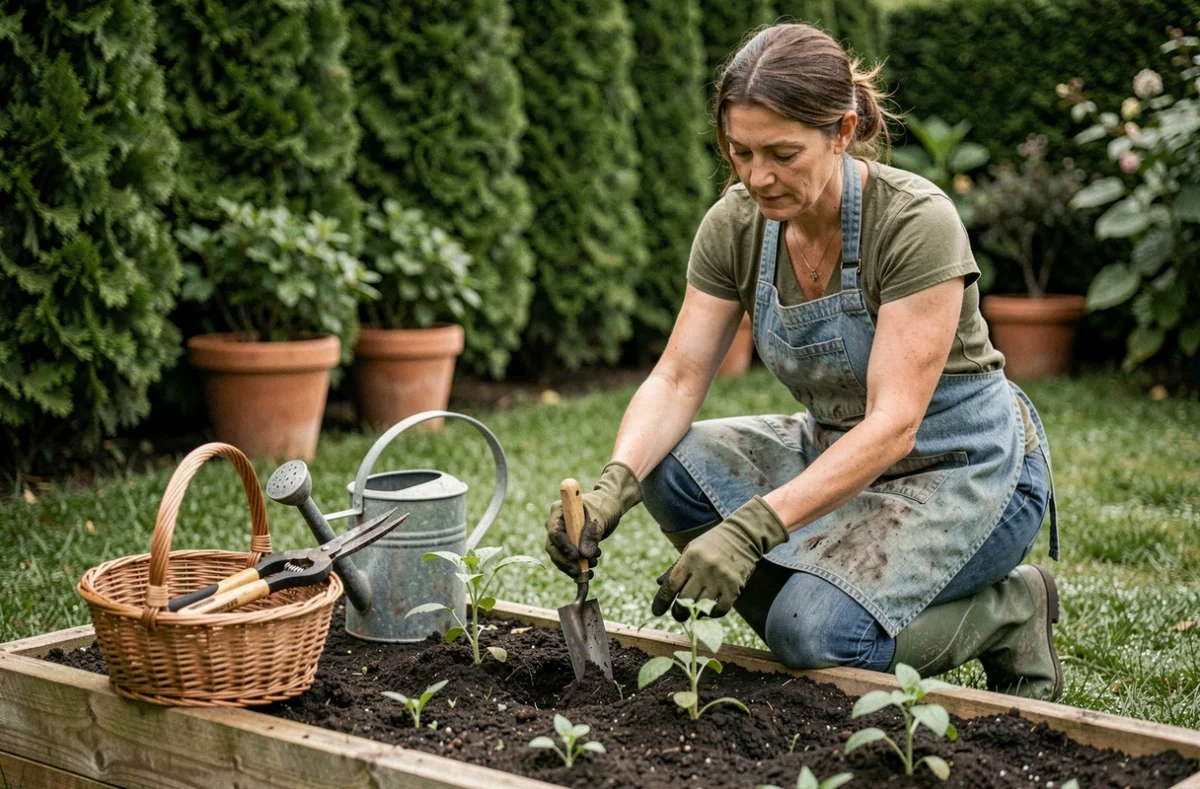
An anvil pruner on a semi-mature apple branch, a grelinette plunged into compact clay-limestone soil: the technical gesture always precedes the choice of tool. Being well-equipped in the garden throughout the year requires reasoning by constraints (nature of the soil, type of vegetation, frequency of intervention) rather than by a generic list.
Battery ecosystem and reparability index: the criteria that tool lists ignore
We observe that the majority of buying guides still compare motorized tools based on their power or advertised autonomy. This is no longer the determining factor for equipment intended to last several seasons.
The reparability index, rated out of 10, must be displayed on all relevant electrical equipment at the time of sale in France. This rating includes the availability of spare parts, the relative cost of components, and ease of disassembly. For a battery mower or an electric hedge trimmer, we recommend not going below a score of 7.
The second pitfall concerns the battery ecosystem. Buying a blower from one brand and a hedge trimmer from another means multiplying chargers, cell formats, and replacement costs. Checking compatibility between tools from the same platform (same voltage, same connectors) before any purchase prevents ending up with three incompatible batteries at the back of the garage.
Extended producer responsibility obligations now cover batteries and gardening items, making their end-of-life collection easier, but do not guarantee their interchangeability.
We have compiled useful resources on equipment on Le Jardinier Décorateur to delve deeper into these issues of compatibility and durability.
Soil working tools: adapting the choice to soil texture
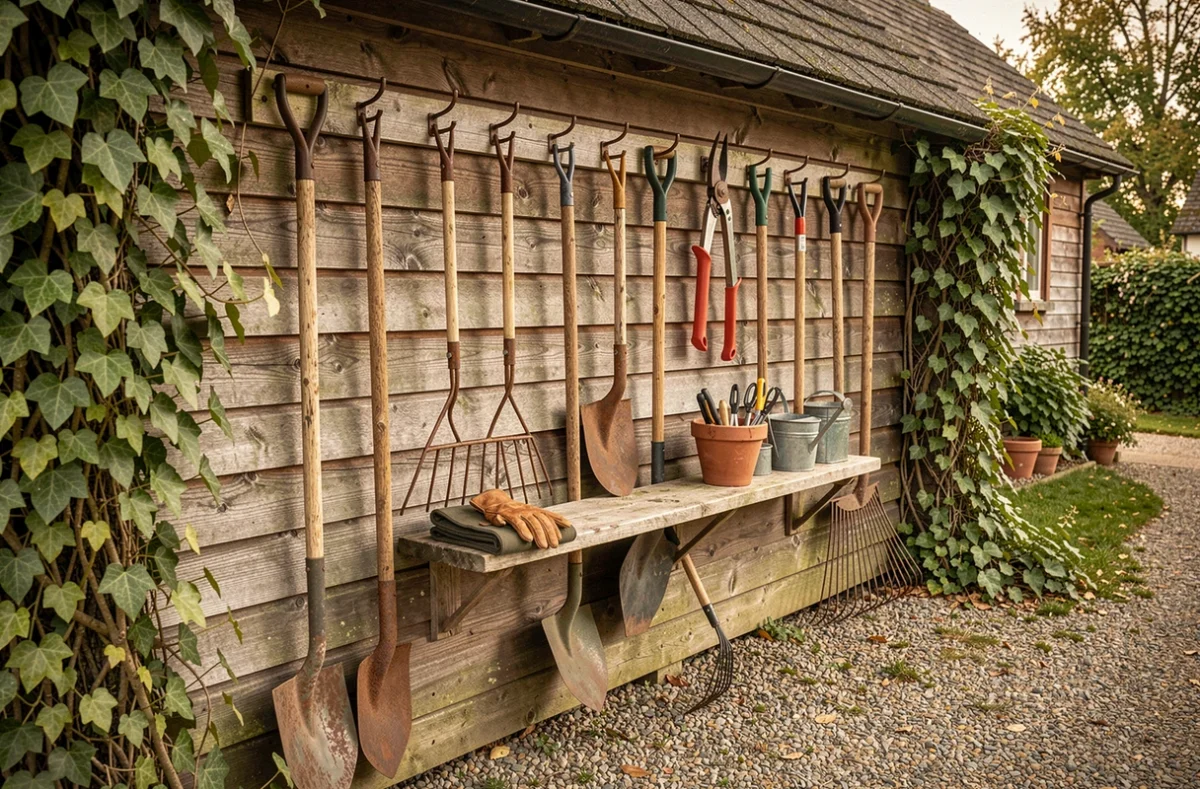
The grelinette is a superior alternative to the spade on living soil. Its principle (loosening without turning the layers) preserves soil fauna and capillary structure. However, on heavy, clayey soil that has never been worked, a narrow, sharp spade is still necessary for the first pass of the season.
The digging fork completes the duo. It excels in stony soils where the spade struggles and deforms. Its ability to lift clods without cutting them makes it the preferred tool for harvesting root vegetables in autumn.
Claw and rake: two distinct functions
The claw (or fork) crumbles clods after digging and incorporates amendments into the surface. The rake levels, refines the seedbed, and collects debris. Confusing the two leads to double work.
- 4-pronged curved claw: superficial loosening and mixing of compost in the top 5 centimeters of soil.
- Straight-toothed steel rake: leveling of cultivation beds, preparation of grass seed sowing.
- Leaf rake (flexible, fan-shaped): collecting fallen leaves without uprooting young grass shoots.
Choosing a handle made of ash or beech wood rather than pine offers better resistance to bending and a significantly longer lifespan. Composite wood or fiberglass is suitable for users looking for lightweight options.
Pruner and lopper: clean cuts condition plant health
A poorly sharpened pruner crushes the branch instead of cutting it. The irregular wound heals slowly and becomes an entry point for pathogenic fungi. Sharpening the blade every 20 to 30 cuts with a fine diamond stone is part of regular maintenance, not an exception.
Two mechanisms coexist. The bypass pruner is suitable for green wood and sap-filled stems. The anvil pruner is used on dead or dry wood, where compression does not harm the plant tissue.
The lopper extends the pruner for branches of larger diameter. Its gearing (rack or gear) reduces cutting effort. The right reflex is to never force a pruner beyond its cutting capacity: beyond that, the lopper takes over, and beyond that, the pruning saw.
Usage hours for motorized tools: local regulations to check
Gas mowers, brush cutters, engine blowers: these tools generate a noise level that falls under the public health code. Permitted time slots vary from one municipality to another, set by municipal or prefectural decree. Assuming a national schedule (“not before 9 a.m. on Sundays”) without checking local regulations exposes you to a fine.
The process is simple: consult the town hall’s website or the PanneauPocket app to find out the exact time slots. Some municipalities prohibit any motorized tool on Sunday afternoons, while others allow mowing until early evening on weekdays.
Seasonal maintenance of tools: the gesture that extends lifespan
Cleaning after each use (soil, sap, moisture) prevents corrosion. For cutting blades, a cloth soaked in denatured alcohol removes sap residues and limits disease transmission between plants.
- End of autumn: complete sharpening of blades, oiling of joints, checking for split handles.
- Spring: checking batteries (charge level, condition of connectors), greasing of lopper gears.
- After each rain: drying wooden tools to avoid swelling and cracking of the handle.
Gardening gloves also deserve technical attention. A goat leather model protects against thorns while maintaining the dexterity needed for transplanting. Synthetic gloves coated with nitrile resist prolonged moisture better but offer less tactile sensitivity.
A well-maintained garden throughout the year relies less on the number of tools than on their suitability for the soil, plants, and season. Three properly sharpened cutting tools, a grelinette suited to the width of your beds, and a coherent battery ecosystem cover the vast majority of interventions, from the first sowing in March to the last mulching in November.