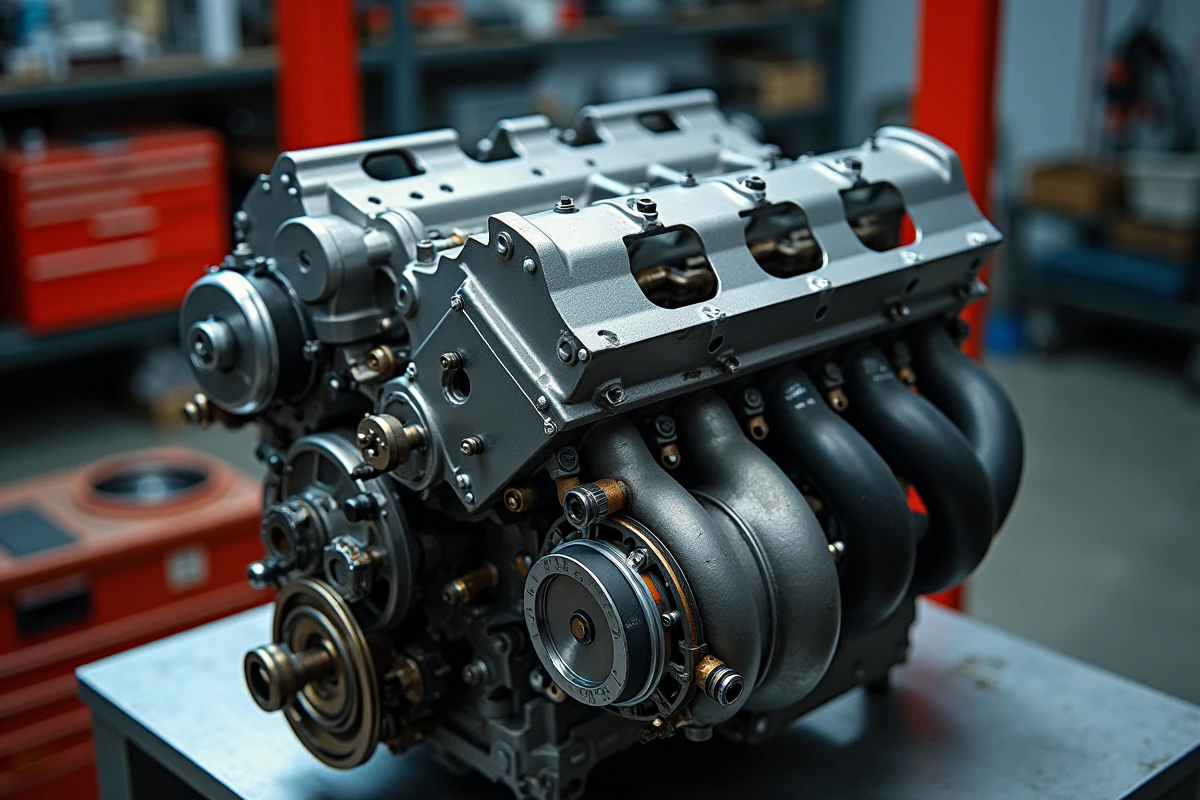
You are looking for a replacement engine for your Peugeot 307 and you come across an ad for a block from a Citroën Berlingo. Or a friend offers you a turbo salvaged from a Ford Focus. The DV6 1.6 HDi engine, developed by the PSA group, equips vehicles from different brands. Understanding its compatibility between Peugeot, Citroën, and Ford prevents costly mistakes when sourcing parts.
The DV6 Block: A PSA Engine Shared with Ford
The DV6 is a four-cylinder diesel engine designed by PSA (Peugeot-Citroën). Ford has integrated it into several of its European models thanks to an industrial agreement between the two groups. The block itself, the cylinder head, and the injection system come from the same technical base.
Specifically, a DV6 installed in a Peugeot 206+ shares its architecture with that of a Citroën C4 Picasso or a Ford Fusion. The DV6 engine block is physically identical from one brand to another. The differences lie elsewhere: in the electronic management, the wiring harness, and sometimes the mapping of the ECU.
An article details the compatibility of the Ford DV6 engine according to Antoine le Pilote, which helps to better understand the subtleties between versions.
DV6 Engine References and HDi Power Variants
Not all DV6 engines are strictly interchangeable. The engine code engraved on the block (visible on the front face or on the manufacturer’s plate) remains the reference to check before any exchange. Have you ever noticed that two vehicles equipped with the “1.6 HDi” do not necessarily have the same power?
Here are the most common variants:
- 9HX / 9HY (DV6 TED4): version associated with an intermediate power, found on Peugeot 307, Citroën C4, and some Ford Focus/C-Max.
- 9HZ (DV6 TED4): higher power variant, often paired with a variable geometry turbo. Installed on C4 Picasso, Peugeot 308, Ford Focus II.
- 9HW: reduced power version, typical of Peugeot 206+, Citroën C3, Ford Fiesta.
A 9HZ engine salvaged from a C4 Picasso can replace a 9HZ from a Peugeot 308 without major modifications to the block. However, switching from a 9HW to a 9HZ involves differences in turbo, injection, and ECU. The engine code takes precedence over the commercial name “1.6 HDi”.
1.6 HDi Spare Parts: What is Actually Interchangeable
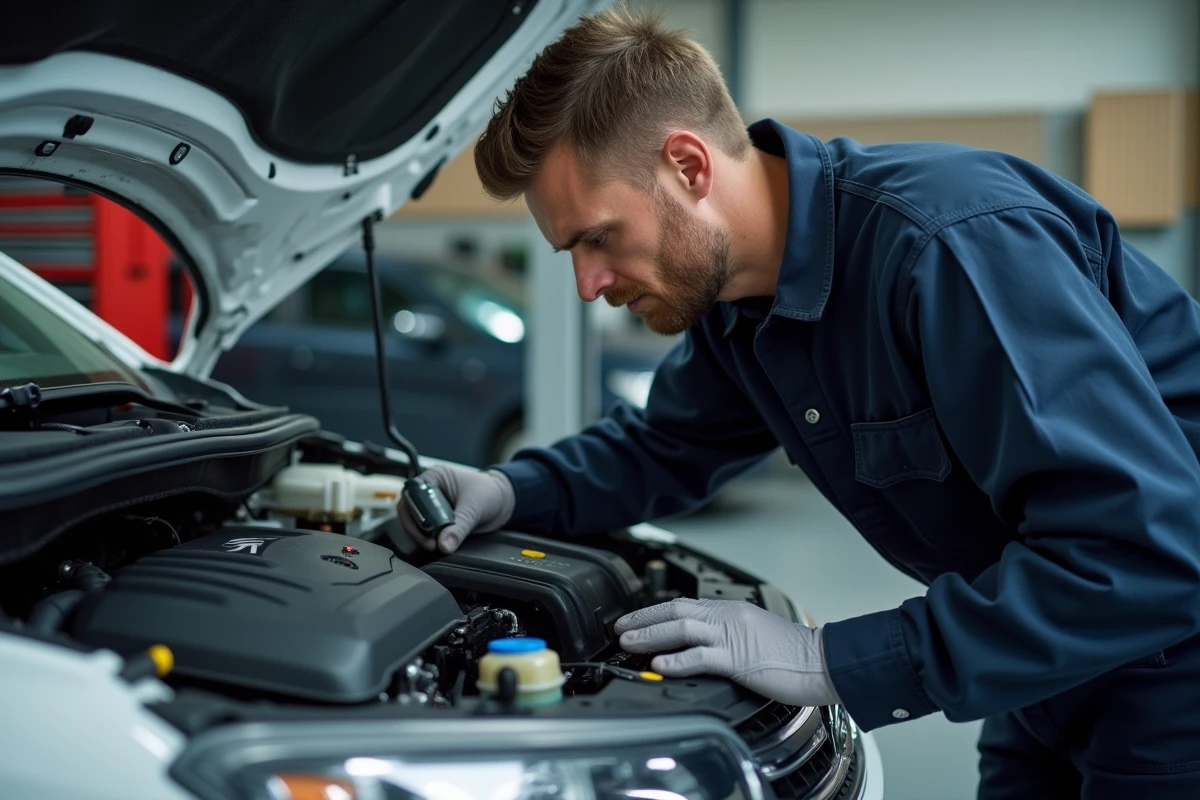
The good news for owners: many mechanical parts are common between Peugeot, Citroën, and Ford on the DV6. The timing kit, for example, uses the same references regardless of the final manufacturer. The injectors, high-pressure pump, and turbo are also shared when the engine code is identical.
Why is this distinction important? Because a turbo sold “for Ford Focus 1.6 TDCi” can cost less than the same turbo referenced “Peugeot 307 1.6 HDi,” even though it is exactly the same part. Comparing prices between PSA and Ford references allows for real savings.
Elements that Differ Despite the Common Block
The engine control unit (ECU) is the main source of incompatibility. Ford uses a different electronic management system than PSA. Swapping a Ford ECU for a Peugeot ECU without reprogramming will not work.
The particulate filter (DPF) can also vary depending on the chassis. Its shape and fixings depend on the vehicle, not the engine. The same goes for the engine wiring harness, which remains specific to each brand and model.
Reliability of the DV6 and Points of Caution When Buying
The DV6 engine has a generally good reputation in terms of reliability, provided that a few maintenance rules are followed. The timing belt requires regular replacement, and a delay in this maintenance can lead to serious mechanical failure (valve-piston contact).
Here are the points to watch for on a used DV6, regardless of the brand:
- The condition of the turbo: an abnormal whistling or blue smoke on acceleration indicates advanced wear.
- The clogging of the DPF: repeated short trips clog the particulate filter and trigger incomplete regenerations.
- The quality of the engine oil: the DV6 requires oil compatible with the DPF (specific low ash standard). Using unsuitable oil accelerates clogging.
- The injectors: irregular flow return causes jerks and excessive fuel consumption.
The Case of the Dual-Mass Flywheel
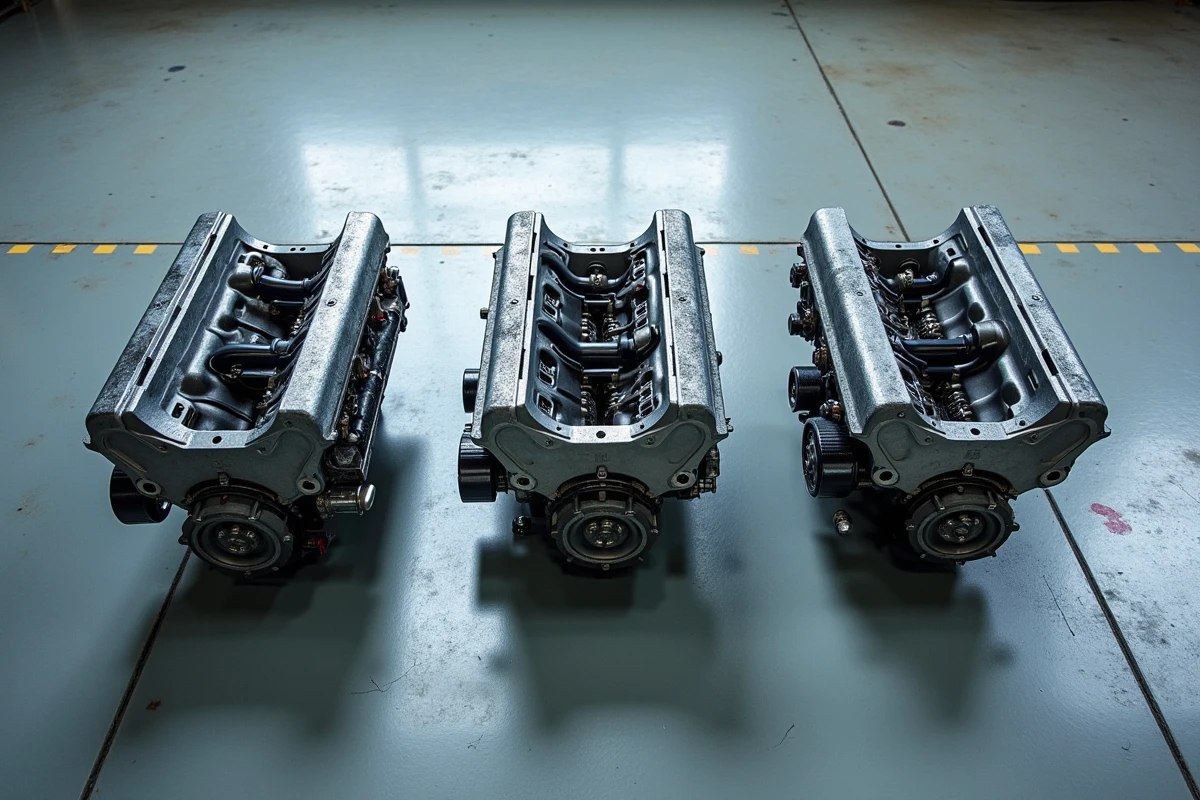
The dual-mass flywheel equipping most DV6 engines eventually wears out. The typical symptom is a knocking noise at idle, with the engine warm. Its replacement represents a significant cost, but it is a common problem across all brands using this block.
Exchanging a DV6 Engine Between Brands: Practical Precautions
Replacing a DV6 from a Peugeot with a DV6 from a Citroën Berlingo is feasible if the engine code matches. The engine mounts are often identical within the PSA group. Between PSA and Ford, the mounts and wiring harness differ, making the exchange more complicated without adaptation.
For a swap between PSA brands (Peugeot to Citroën or vice versa), the operation generally involves replacing the block with its peripherals, while keeping the ECU and wiring harness from the receiving vehicle. For an exchange involving a Ford, expect more extensive electronic adaptation work, often reserved for professionals equipped with the appropriate diagnostic tools.
The DV6 engine remains one of the most widespread diesels on the European used market. This massive distribution facilitates access to spare parts and keeps maintenance costs reasonable. Checking the exact engine code before any parts order or block exchange remains the reflex that avoids unpleasant surprises.