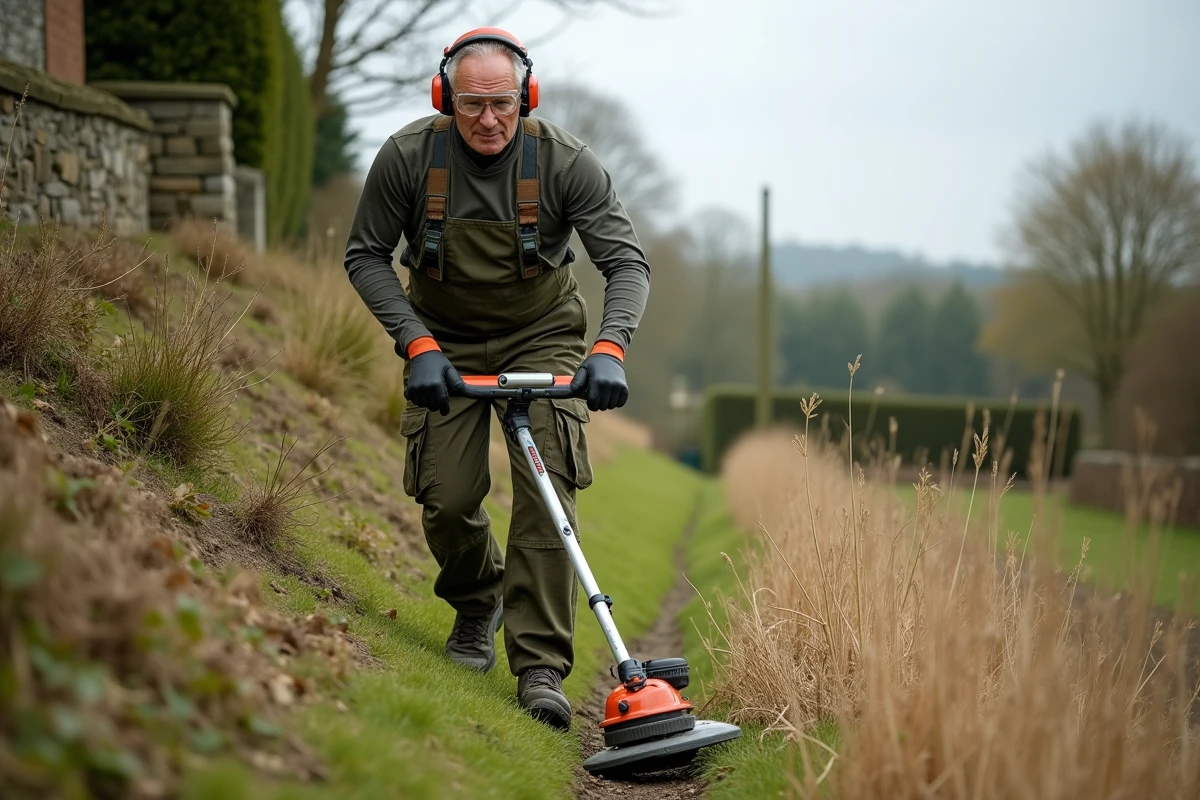
A brush cutter is a motorized tool designed to cut vegetation that a lawnmower cannot reach: tall grasses, brambles, and underbrush along walls or on sloped terrain. Choosing the right model depends on three specific technical parameters: the type of motorization, the cutting system, and its suitability for the actual topography of the land.
Brush cutter in sloped urban gardens: an underestimated use case
Most buying guides describe uses on flat terrain or in agricultural contexts. Urban gardens present different constraints: marked slopes, proximity to neighbors, and small areas cluttered with walls, stairs, or flower beds.
On a slope, the weight of the machine becomes the primary criterion. A conventional gas brush cutter often weighs several kilograms more than an equivalent battery model. Working on a slope with a tool that is too heavy can fatigue the back and arms in just a few minutes, which degrades cutting precision.
Local anti-noise regulations add an additional constraint. Many municipalities impose restricted time slots for motorized gardening tools, sometimes limited to weekday mornings. A two-stroke gas engine, which is noisier than a battery model, further reduces the actual usage window.
Checking the municipal decree before purchase prevents ending up with an unusable tool half the time. To explore ranges suited to these constraints, the references available on debroussailleuse-warrior.com allow for comparing technical characteristics by type of motorization.
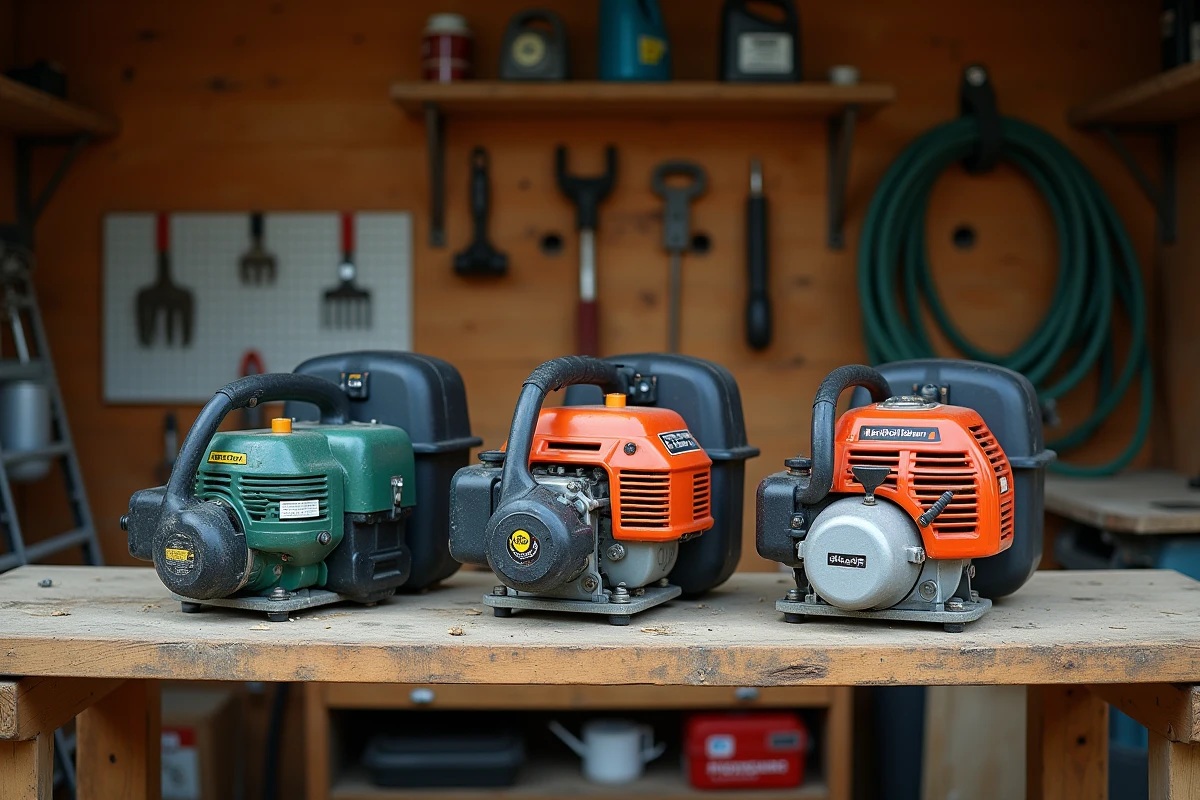
Gas, battery, or corded electric motorization: concrete selection criteria
The type of motorization determines autonomy, noise level, weight, and maintenance costs. Each technology corresponds to a specific usage profile.
Battery brush cutter
Battery models have notably improved in recent years. According to the Gardening Market Observatory, the upward trend of cordless brush cutters for residential gardens has been confirmed since 2024, driven by advancements in autonomy and power rivaling gas models.
The battery is suitable for small to medium-sized gardens where noise is a concern. The absence of a cord provides appreciated freedom of movement on uneven terrain. The limitation remains autonomy: depending on vegetation density, a full charge covers a variable work session, and having a second battery quickly becomes necessary.
Gas brush cutter
The gas engine (two-stroke or four-stroke) remains the reference for large areas and dense vegetation. The available power allows tackling thick brambles without straining. The four-stroke consumes less and produces less vibration than the two-stroke, but it is heavier.
This choice is justified for areas exceeding several hundred square meters of underbrush or for regular professional use. For a standard urban garden, gas motorization is often oversized.
Corded electric brush cutter
The corded model remains the cheapest to purchase. Its power is sufficient for finishing touches and moderate grasses. The constraint of the cord limits it to the immediate vicinity of the house, excluding sloped areas far from a power outlet.
- Battery: preferred for sloped urban gardens, residential areas subject to noise restrictions, and modest surfaces
- Gas: reserved for large areas, dense vegetation (brambles, woody shoots), and prolonged use without electrical access
- Corded electric: suited for small flat areas, close to a power supply, for edging and finishing work
Cutting system: nylon head, blade, or disc depending on vegetation
The choice of cutting system directly influences the efficiency and lifespan of the tool. This parameter is as crucial as the motorization but is often overlooked at the time of purchase.
The nylon line head is suitable for soft grass and edging finishes. The line wears out and is easily replaced. On stony soils, wear accelerates significantly: the Chamber of Agriculture of France noted in a recent study a growing preference for hybrid blades among users facing this type of soil in non-agricultural gardens.
The two or three-tooth blade tackles dense grasses and young woody shoots. It withstands stone projections better but requires regular sharpening.
The brush disc, similar to a circular saw blade, is aimed at thick brambles and shrub shoots. Its use requires enhanced protective gear (visor, leg guards) and good control of the tool.
Ergonomics and harness: what changes after an hour of work
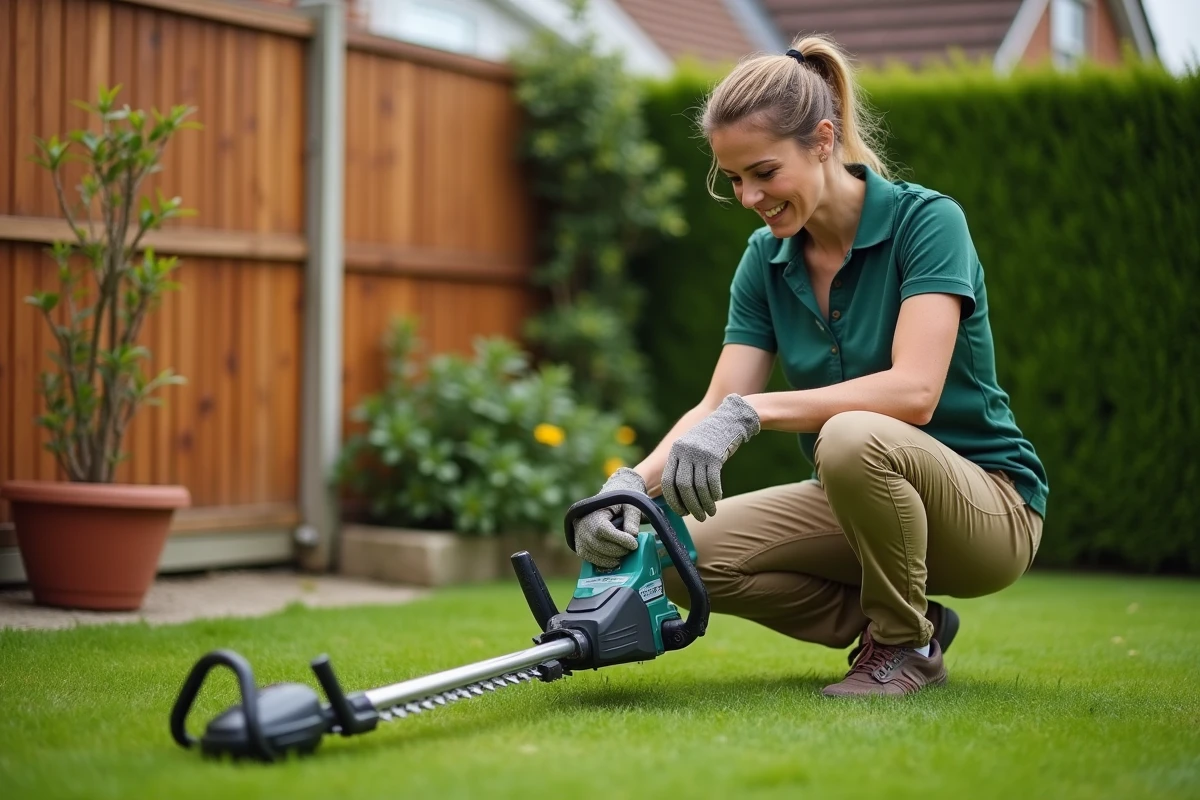
Ergonomics is tested over time, not in a store for two minutes. Three elements deserve particular attention.
The type of harness determines the weight distribution on the body. A simple shoulder harness is sufficient for short sessions. Beyond half an hour, a double strap harness with a backplate relieves the shoulders and lower back. Professional models sometimes incorporate a suspension system that dampens vibrations transmitted to the torso.
The handle also plays a role. A loop handle (D-type) offers maneuverability for cluttered areas. A double handlebar (bike-type) stabilizes the tool on large flat surfaces and reduces wrist fatigue.
- Simple harness: sessions of less than thirty minutes, light finishing work
- Double harness with backplate: prolonged sessions, sloped terrains where balance matters
- Double handlebar: regular sweeping on clear surfaces, cutting tall grass on flat terrain
Connected brush cutters: a recent evolution to watch
Recently, some manufacturers have offered models equipped with connected functions. The journal Technique du Jardin documented in 2026 the emergence of maintenance tracking apps and vibration alerts integrated into brush cutters. These sensors signal when the air filter needs cleaning or when the vibration level exceeds a threshold that could fatigue the user.
These functions remain marginal in the consumer market and mainly concern higher-priced ranges. For typical domestic use, they do not justify an additional cost, but they reflect a technical direction that could become more mainstream in the coming years.
The choice of a brush cutter boils down to three considerations: motorization suited to the terrain and local noise constraints, cutting system calibrated to the actual vegetation of the garden, and harness adapted to the expected duration of use. Testing the weight of the machine in real conditions, on the slope of one’s own garden, remains the best filter before purchase.